Sub Plans? Ugh!

Your alarm goes off in the morning, and you can barely roll over to hit the snooze button one more time. Your head is pounding, your entire body aches, and your throat is on fire. You have a decision to make: call in sick or suffer through the day? For most employees, it would be an easy choice– call in and go back to bed. But you’re a teacher, so the choice is a bit more involved. You’ve got to call in, log in to the sub system and request a sub (and hope that someone will pick up the job), and then…

Sub plans. Ugh. 

The ever dreaded sub plans. The last thing you want to do when you feel like you’re on death’s door is write out lesson plans for the day with enough details that a non-teacher can carry them out without any problems. Sometimes it feels easier to just go to work anyway and hope you can make it through the day. 

But sometimes, life happens, and there are simply days that you will have to write last minute sub plans. Occasionally, you luck out and the lesson you already had planned for the day is simple, like a test day or computer lab day for research. More often than not, though, your already planned lessons and activities are too complicated to leave for a sub. When this happens, it’s best to have a back up plan. It may not have to do with the content you are currently teaching, but that’s okay! If it’s educational, keeps students engaged, and is simple enough for anyone to pull off, it’ll do! 

Being prepared can save you a lot of hassle in the event of an emergency sick day. Create a folder of emergency sub plans that a substitute can easily get to. This folder should contain a couple of different lesson plans, complete with full instructions and any worksheets or activities they will need. 

If you don’t want to have a physical folder with lesson plans and worksheets, another option is to create a digital lesson that students can access on their ChromeBooks. Have a webquest, digital assignment, or other task ready to be sent out in the event of an emergency. 

Another option is to have a fellow teacher help you out. Sometimes, circumstances just don’t allow you to spend much time prepping a last minute sub plan, and you have to rely on others to help you out. I remember one Friday morning, I had a fellow teacher text me in a panic because her baby had decided to come two weeks early, and she was unable to write out an emergency sub plan, as she was at the hospital. She asked me to make some extra copies of the lesson I was teaching to my students for the day, and to run them down to her sub.  Make sure to have at least one contact from your team at school that you can send a quick text to should you need some help. 

No one ever plans for sickness, but it happens. Rather than risk getting our students sick, or risk being sick longer because you aren’t resting, it’s best to be prepared and to have a plan for when you need a last minute sub. Sure, it’s not ideal, and it’s kind of a pain to submit sub plans when you’re not feeling great, but if you’re prepared, it’ll be easy peasy, lemon squeezy!

Preparing Today’s Youth for Adulthood

The other day, I was taking a much needed break, mindlessly scrolling through Facebook, and stopped when I saw a meme one of my good friends had posted. I chuckled as I read the meme: “I’m glad I learned about parallelograms in high school instead of how to do my taxes. It comes in handy during parallelogram season.” 

It’s funny because it’s true— I remember sitting in some of my high school classes thinking about how I would likely never use some of the things I was being taught. I honestly don’t remember the last time I had to use the quadratic formula or had to recall the steps/process of photosynthesis. Unless you enter a career field that will use those specific skills and bits of knowledge, you likely won’t use them much in your adult life (or at least until your kids come home from school needing help on their homework!). 

When I was in high school, the requirements to graduate didn’t include any kind of class that taught life skills type of content. You know, the stuff that you use on a fairly regular basis as an adult— budgeting, retirement/savings plans, household tasks like cooking, cleaning, and laundry, basic car maintenance, simple household fixes, basic sewing, and so on. Had my parents not done a pretty good job teaching me these skills, I would have been pretty lost when I moved out on my own. While a good majority of high school students have a parent or guardian they can turn to with life skills questions, many do not. What if, rather than expecting kids to just suddenly know how to be an adult and take care of adult responsibilities, we teach them how to do this and require them to take a class covering these skills prior to graduating?

I know there are many elective courses students can take that teach them these basic life skills. But they are just that— elective. Not every student is going to choose to take a sewing or cooking class. Not every student will want to sit through a financial literacy course. However, I am certain that if they were required to do so, they would come out on the other side more equipped to enter the adult world and carry adult-level responsibilities. 

There are many students who would greatly benefit from a course like this. It would provide an excellent opportunity for kids to get hands-on experience with the skills necessary for adult life while still under the care of an experienced adult, and would also give them the chance to make mistakes and learn from them before the cost of said mistakes is higher. 

I am sure there are already high schools out there who are integrating some kind of adult-readiness courses, and that’s amazing! It would be even more amazing if all schools nation wide would see the value of such a course and would add it to the list of required courses prior to graduation. Besides, I think it would be a fun class to take— and teach!

When we equip the next generation with the tools they will need in life, they will enter the adult world more confident, more knowledgeable, and more prepared to take on the responsibilities that come with being an adult, and that’s something that we can all benefit from. Knowledge is power, so let’s do our best to arm our students with the knowledge they need to succeed!

Planting the Seed

Here is a brief list of book recommendations for early readers (PreK-2nd Grade). Stay tuned for more recommendations and more age groups!

Matilda by Roald Dahl

A cult classic for many, Matilda might be daunting for your littles to read on their own, but it makes a GREAT read-aloud! Trunchbull is a bit intense for some, however, so teacher/parent discretion is advised. Rewards for finishing the book can include chocolate cake and watching the equally classic movie adaptation.

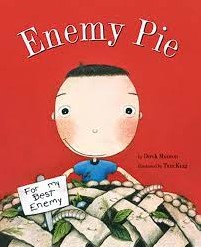
Enemy Pie by Derek Munson

This book is a perfect way to teach kindness and friendship. After Jeremy Ross (or “#1 Enemy”, as he is known to the young narrator), moves in down the street, our narrator turns to his dad for help. The father has just the solution! A recipe for a pie that gets rid of enemies. But as it turns out, this secret recipe is much more effective at turning a best enemy into a best friend.

Who Wet My Pants? by Bob Shea

While it might sound like a potty-training story, Who Wet My Pants? is actually a story about how embarrassment can lead to anger, accidents can (and will) happen, and kindness is the best response.

The Book With No Pictures by B.J. Novak

This book is required to be read aloud. No, really. The book starts off with, “Everything the words say, the person reading the book has to say. Side effects of reading this book can include uncontrollable giggles, choruses of, “Again, again!” from the kids, and not being able to take yourself seriously.

What books resonate well with your early readers? How do you encourage them to be excited about reading?

What Teaching Study Skills REALLY Involves

The long term effects of learning to study can stretch much further than than the average high school sophomore may think.


Bart’s Story

When Bart started school with a half-tuition scholarship that would renew yearly pending his GPA performance, his college career future looked bright.  Once classes began, however, he says he “blew off” his classes and lost the scholarship after two semesters.  This required him to get a part time job on campus, and eventually a full time job–ultimately extending the time until graduation as he had to cut back on classes in order to function.  He hadn’t realized the thousands of dollars he could lose–beyond just the scholarship itself–until it was too late.

Declining Studying Stats

Bart’s story is becoming an increasingly familiar one for college students.  Research shows a significant decline in time students are devoting to their studies.  Until the 1960’s, undergraduates spent about 40 hours per week academically.  Today, that number is down to 27 hours each week–which includes both class time and studying.  The time spent on studying alone is comparable; in 1961, it was 25 hours per week–by 2003, it had whittled down to 13 hours.

The Math and Money of Study Time

Bart urges other students to carefully examine the monetary value of their time spent studying.  Below are some figures to consider:

  • $19 per hour: studying 13 hours per week over a 16-week, $4,000 tuition semester
  • $10 per hour: studying 25 hours per week over a 16-week, $4,000 tuition semester
  • $67 per hour: studying 13 hours per week over a 16-week, $14,000 tuition semester
  • $35 per hour: studying 25 hours per week over a 16-week, $14,000 tuition semester

Whatever the tuition rate, the value of time spent studying to keep up grades and scholarships is worth more than the $7.25 minimum wage jobs students would otherwise need to work.

Genuine Preparation for the Future

University of the Fraser Valley students and teachers. Rick Collins Photography - UFV 1-604-799-0219
University of the Fraser Valley students and teachers.

Informing our students of the numbers listed above is just one small step in preparing them for the realities of college and beyond.  We believe that it is paramount that students cultivate intrinsic motivation if we hope they will dedicate every effort required to succeed in their desired field as adults.  What do the child who has always been denied sugar and the student who always been denied opportunities for self-directed learning have in common?  Both are likely to spend their time and resources unwisely the moment they gain autonomy.

That said, we also find value in encouraging “college and career readiness” strategies to help students view the long term effects of developing study skills.  An example might be teaching a third grader to develop stamina in reading a book without distraction.

As we empower students to develop such motivation and skills, our expectations of them should remain high–not out of pressure-inducing fear that they could otherwise fail in the “real world,” but out of belief in their ability succeed.  This is key in fostering the kind of love of learning now that will truly prepare them prepare them for the future.

What are some ways you prepare students for the future while still encouraging them to live and learn with passion now?  Share in comments below!

Sources:

Campo, Carlos. Jan. 29, 2013. “A Challenge to College Students for 2013: Don’t Waste Your 6,570.” Huffington Post.

Photo Credit:

Featured Image: Francois de Halleux

University of the Fraser Valley