Why & How to Nurture Independent Kids Wherever You Live #TeacherMom

I recently had the chance to visit some very dear friends from high school in different parts of a neighboring state. Of the friends with kids, one lives in a suburban style area, and the other lives in an area that is so rural they only have one neighbor (their parents across the street). And I live in a fairly urban area. The differences made me realize that though the ways we might nurture kids’ independence can vary based on where we live, it is always possible.

Here are our examples. Thank you very much to my friends for sharing their experiences!

Rural: Alea, children aged 8, 6, & 3

“We try to involve the kids in whatever it is we’re doing (at an appropriate level). Dennis just brought our youngest home from letting her feed the bottle calf. He’s an abandoned twin. She then brought me the bottle to help her wash it out. Kids looove taking care of babies. Other examples include:

  • The kids also help pick which plants we’re going to plant and help tend & harvest the garden.
  • When it’s nice weather they play outside [on their own] for at least an hour in the mornings before it gets hot.
  • I keep the sippy cups/kid cups in a drawer and not in the cupboard so they can reach it themselves and get a drink from the fridge door.
  • Most days I let them pick their outfits
  • They have some “mandatory” chores but then there’s a “chore of the day” that they get to pick. In general rather than give demands we like to give options.
  • We have also been discussing how letting children have responsibilities fosters independence. Kids want to help with things and how many times do I not let them because “they won’t do it right”? I’ve been trying to let them do the things they can do… They may not wash the windows streak-free but surely I can let them have a rag and a squeegee and have at it …These are hard things for me, but I’m working on them!”

Suburban: Stephanie, children aged 4 & 2

“We live in a quiet, older neighborhood with a fenced backyard. Some ways that we like to encourage independence outside are:

  • Sending our 2 year old into the backyard alone to grab a toy and bring it to the front.
  • Letting our 4 year old play on her own for awhile in the backyard while we’re in the front.
  • Establishing boundaries for bike riding so our 4 year old can ride comfortably without wondering or being told she’s gone too far. 

“Other ways we encourage independence inside our home include:

  • Letting them pour their own milk, water, syrup, etc. The more they try the better they get and I love the giant smile they give me when they pour perfectly. Accidental spills are lessons, not cause for punishment.
  • Letting them serve themselves at meals. They scoop from the serving dishes on the table onto their plates, which lets them choose which foods from the table they want, and how much.
  • Letting them help with the cooking and baking. Our 4 year old is a pro at rolling out sugar cookie dough, using a cut out, and putting it on the tray and the 2 year old loves to stir and pour in ingredients.
  • Letting them do the chores such as vacuuming, dusting, washing dishes, sweeping, and raking. Our kids actually ask to help clean! Joining in on the household chores makes them feel like they are part of the team and are contributing to helping our family. I never redo any of their tasks so they always have a full sense of accomplishment.”

Urban: Mary, children aged 8, 4, & 2

We live in a townhouse development of about 60 homes, which is surrounded by a mixed development (single family homes, duplexes, apartments, etc) & close to our city center. We enjoy our proximity to schools, the library, the rec center, and our downtown, all of which we usually access by bike. We also enjoy our townhome common area in which we can send our kids to find playmates close by (and without worrying about driveways as the garages all face a back street). Some ways we work to foster independence based on where we live include:

  • Encouraging unsupervised play as much as possible. Occasionally one of the kids will run inside to report something important, but our area is dense enough that I’m never far away! (see post, “Where’s the Mom?” from last year)
  • Having our oldest to walk or bike to school 1 mile away (usually with a group of friends but occasionally she’ll be on her own)
  • Allowing our oldest to walk to a nearby bakery to pick up family groceries or to select a treat for herself. I love how this has helped her consider how much things cost & how to set a budget for herself.
  • Encouraging our kids to plan their own free time (and working to preserve as much of that free time as possible!) See “Inventorying a Culture of Agency at Home.”
  • Biking & riding transit throughout the city together to help my kids learn to feel comfortable enough plan adventures alone or with friends when they are just a bit older.

Wherever we live, opportunities for children to enjoy independent childhoods are in abundance. We can learn so much from one another as we support each others’ efforts to help our children feel confident, responsible, and capable.

What are ways you work to foster independence for children based on where you live?

featured image: DeathToTheStockPhoto

5 Picture Books for Trusting Child’s Development #TeacherMom

Alternatively, I might have entitled this, “5 books that remind us of the importance of self-regulation, fostering independence in childhood, and approaching parenthood as a gardener more than a carpenter.”

Whether it’s allowing our children to pick up bread at the grocery store or limiting the endless amounts of structured time in favor of “BeTime,” we can take measures to trust our children to take the lead in their own development. What do you think of the 5 books I’ve hightlighted below? Which ones would you add to the list?

“They stopped thinking she was perfect and started worrying about what might be wrong with her. By the time she was seven years old, there wasn’t a single minute when Princess Cora wasn’t being trained.”

Princess Cora & the Crocodile by Laura Amy Schlitz & Brian Floca

“”We’re bats,” said Mother Bat. “We can see in darkness. Come with us.” Stellaluna was afraid, but she let go of the tree and dropped into the deep blue sky.”

Stellaluna by Janell Cannon

“The bird said, “Ask yourself where it is you want to go, and then follow the signs you already know.”

The North Star by Peter H. Reynolds

“Then you arrive home again, and you look at your window from the outside.”

Windows by Julia Denos

“Getting to get the baguette is Nanette’s biggest responsibility yet.”

Nanette’s Baguette by Mo Willems

featured image: DeathToTheStockPhoto

On Feeling Like We Can’t Nurture It All… #TeacherMom

On a given day, a parent might come across lists of ways they should be nurturing their children’s…

…creativity

…resilience

…confidence

…problem solving

…empathy

…assertiveness

…fine & gross motor skills

…communication skills

The list goes on. And meanwhile, we have days where just getting dinner on the table feels like someone should be giving us a medal.

While it is true that all of these require individual, concerted effort from time to time, the truth is that trying to tend to all this nurturing on an individual basis each day would be like drinking from a fire hose! When we try, we’ll quickly find ourselves under a crushing weight of what I’m going to call “nurture-overload.”

Instead, here are ways we might avoid that overload and feeling of hustle:

  • Follow the child’s lead. Allow their questions or daily tasks to drive the discussions and inform how you help them connect to various skills and traits.
  • Read together regularly. If it is a regular part of your time together, you can depend on a healthy exposure to many different concepts.
  • Trust your child’s independence. As we allow kids to have responsibilities as they grow (and not allow media hysteria to color what we view as age-appropriate), many of these skills will strengthen naturally. See if you can count how many skills and qualities might be cultivated in this Sesame Street example below (from one of my favorite websites, LetGrow.org)

We want our children to grow up to have all the skills and traits they’ll need to be caring, capable adults. If we step away from worry about getting it right and step toward more trust, we may find that these things come more naturally than we might anticipate!

featured image: DeathToTheStockPhoto

Hair Care & Respect Books: Why We’re Loving Them #TeacherMom

Last year was a veritable cascade of picture books relating to hair. Specifically, how to care for and respect natural black hair. And I couldn’t be more thankful when it comes to teaching my daughter to care for and respect her own and others’ hair.

First, we came across Cozbi A. Cabrera’s “My Hair Is a Garden.” Though my daughter’s hair isn’t natural black hair, it is curly and wild. As such, it has produced a lot of frustration at the amount of care it requires. As we read Mackenzie’s story, I observed the way my daughter was able to relate. She felt relieved to find that she isn’t the only one who needs to give her hair more nurturing (and to realize that there is nothing wrong with that)! I love the way this gorgeous book normalizes black hair (since of course all hair is normal), while also validating the fact that differences do require different kinds of care.


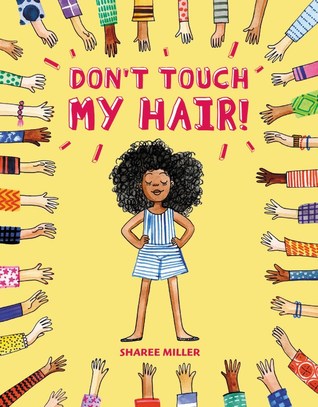
Next we read, “Don’t Touch My Hair,” by Sharee Miller. This hilarious read got us laughing as it gently but firmly asserts essential principles of boundaries and respect. I think the page of even mermaids trying to touch Aria’s hair was my personal favorite!

One other read we loved last year was Princess Hair, also by Sharee Miller. My daughter loved learning all the different names for hairstyles, and seeing the way all of the girls loved and rocked what they had!

Picture books are such a marvel, aren’t they? The way they validate, teach, assure, entertain, and enlighten. These hair-care and respect books have definitely done all of this and more! Thank you, authors!

featured image: DeathToTheStockPhoto

Tolerance of Messy in Favor of Learning #TeacherMom

I like tidiness. I find myself struggling to think straight when my environment gets too chaotic.

And yet for the last several months, our family room inevitably returns to some version of this:

Not too bad, but when it happens every day, several times a day, and across every room and even his bed — it starts to wear down this parent’s sanity.

Lately, however, I have started to try and shift my perspective. I realize that the repetitive scattering of books can look like a mess…or it can look like rich early literacy development.

After all, my 2 year-old is not just yanking them out just to make a mess. He is just devouring them, sometimes flipping through the pictures, other times approximating the story out loud for himself.

When we’re in the classroom, the reality is that we can’t always handle the volume of messy learning — especially when there are 30+ students! That’s why it’s important to spend time talking about our shared responsibilities for our shared learning space, and making room for students to express how they feel about their environment.

We are currently working on learning to put the books back on the shelves, as well. But through this process, both with my very small student at home, and with our classroom students, it’s important to always hold aloft what matters most: the learning. It reminds me of a quote I’ve often heard:

One might similarly state, never let a problem to be solved become more important than learning to be gained.

What are ways a shift in your perspective has helped you navigate the complexities of teaching?

featured image: DeathToTheStockPhoto

Best Inquiry Picture Books: PYP Round-Up

This is part of a series of inquiry picture book round-ups. See also:

Learner Identities & Subjects, which includes traditional subject areas such as math & writing.

Sustainable Development Goals, which includes the global goals such as responsible production & consumption.

Nearly every one of my “inspiring inquiry” posts ends with at least one book recommendation. I wanted to revisit some of them, but I realized that I’ve now written so many inquiry posts that that would take quite a lot of time to click through.

Which brings me to today’s post! It will be the first of a few book round-ups from my inquiry posts, starting with the International Baccalaureate PYP posts. The words in bold are the topic of the inquiry post (linked back the original as well). Please feel free to add additional book recommendations to the comments. Happy reading!

Empathy: The Invisible Boy by Trudy Ludwig

Curiosity: Pond by Jim LaMarche; The Antlered Ship by Dashka Slater & The Fan Brothers

Commitment: A Lady Has the Floor: Belva Lockwood Speaks Out for Women’s Rights by Kate Hannigan & Alison Jay

Enthusiasm: Fancy Nancy by Robin Preiss Glasser & Jane O’Connor; Sam & Dave Dig a Hole by Jon Klassen & Mac Barnett

Appreciation: Last Stop on Market Street by Matt De La Pena & Christian Robinson; Windows by Julia Denos & E.B. Goodale; How to Write Your Life Story by Ralph Fletcher

Independence: Chopsticks by Amy Krouse Rosenthal & Scott Magoon

Cooperation: Flora & the Peacocks by Molly Idle; Officer Buckle & Gloria by Peggy Rathmann

Integrity: Extra Yarn by Mac Barnett & Jon Klassen; The True Story of the 3 Little Pigs; This is Not My Hat by Jon Klassen; Strega Nona by Tomie de Paola

Tolerance: Most People by Michael Lennah & Jennifer E. Morris

Respect: A Boy & A Jaguar by Alan Rabinowitz & Catia Chien; Don’t Touch My Hair by Saree Miller

Knowledgeable: If Picasso Painted a Snowman by Amy & Greg Newbold

Caring: Those Shoes by Maribeth Boelts & Noah Z. Jones

Principled: Penny & Her Marble by Kevin Henkes; We Found a Hat by Jon Klassen; Extra Yarn by Mac Barnett & Jon Klassen

Risk Taker: I’m Trying to Love Spiders by Bethany Barton; Jubari Jumps by Gaia Cornwall; The Dark by Lemony Snicket & Jon Klassen

Open-Minded: This Is How We Do It by Matt Lamothe; Harold & the Purple Crayon by Crockett Johnson; Finding Wild by Megan Wagner Lloyd & Abigail Halpin

Inquirer: Claymates by Dev Petty & Lauren Eldridge; Beyond the Pond by Joseph Kuefler

Communicator (& other communication post): The Big Bed by Bunmi Laditan & Tom Knight

Balanced: Moon by Alison Oliver & Cinder Edna by Ellen Jackson & Kevin O’Malley

Thinker: What Do You Do With A __? books by Kobi Yamada

Action: What Do You Do With An Idea? by Kobi Yamada & Be Kind by Pat Zietlow Miller

Social Skills: Do Unto Otters by Laurie Keller; We Found a Hat by Jon Klassen

Self Management Skills: Forever or a Day by Sara Jacoby; The North Star by Peter Reynolds

Where We Live PYP Unit: This House Once by Deborah Freedman

How We Express Ourselves PYP Unit & other unit: The Big Orange Splot by Daniel Manus Pinkwater; Extra Yarn by Mac Barnett & Jon Klassen; Rosie Revere, Engineer by Andrea Beaty & David Roberts

Great job if you made it all the way through this list! It made me so happy making it–nothing like a picture book memory lane. You probably also noticed the many Jon Klassen & Mac Barnett reads — I guess their work is just conducive to inquiry!

featured image: DeathToTheStockPhoto

In Which the Preschool App Gets Me Revisiting Scaffolding #TeacherMom

Have you ever downloaded the Monkey Preschool Lunchbox app for your kids? If so, you probably know that they adore & can independently play all the games except two. And you probably know exactly which two I’m talking about:

“Put the Fruit Back Together…”

…and “Match the Fruit”

These two games take more stamina than the others. You can’t just start tapping randomly until it moves on until the next game. Which leaves me three choices:

#1: Do those hard games for him so he can play the rest of the game.

#2: Take a firm stance that if he can’t do it all on his own, he’s not ready to play.

#3: Do the hard games together, helping him hold his finger and talking through the process (where did we see the other banana?).

I have tried all three! The teacher side of me would definitely choose #3 every time, but the truth is, sometimes life gets messier than that. The game is usually only even out when we are at a long appointment. Sometimes, he tries to insist on #1 while I am trying to speak with the doctor. Sometimes, I try to assert #2, but find he really does want to give them a try again on his own.

The more I reflect, the more I realize that the only truly damaging stance when it comes to the scaffolding we give our kids is one that is rigid and not sensitive to context.

We like to think of scaffolding as a nice linear graph, gradually releasing toward complete independence in a smooth, graceful line. But really, there are plenty of dips, spikes, and wild turns along the way, all of which require patience for our young students, and for ourselves.

Even for something as silly as making a monkey cheer you on when you match a pair of honeydews.

featured image: DeathToTheStockPhoto