Are Specialty Classes Really Worth It?

Learning to play the recorder in 4th grade was one of the highlights of my elementary school years (though I’m sure my parents weren’t quite as enthusiastic as I was). I remember proudly bringing home my instrument and music book, and squeaking out “Hot Cross Buns” every night as my family covered their ears and pretended to be impressed. I was sure I was going to be the best recorder player there ever was. Turns out I was definitely not the best recorder player, nor was I anywhere close to being so! But even though my recorder playing skills have greatly diminished, and I no longer have the need to play the instrument, the time I spent learning and practicing wasn’t wasted time. Rather, it was time spent learning a new skill, understanding basic music theory, and learning to devote time to practice every day. 

Every now and then, there will be a push to end all “specialty” classes in schools– classes like music and art. Usually the reasoning is lack of funding, lack of resources, or a shortage of qualified teachers. All of those are valid reasons to cut programs, but one must consider the impact of eliminating programs like these. Is it worth the fallout that comes when students don’t have access to these classes? Is the money that would be saved really significant enough that it’s worth putting these programs on the chopping block? I would guess that the majority of teachers would say that it’s not worth it, and that these specialty programs should stay. 

There are so many benefits to providing art and music education. Both areas have been proven time and time again to stimulate parts of the brain that simply are not reached as deeply by typical academic subjects. Music and art encourage creativity. They provide opportunities for students to express themselves. For many students, music and/or art becomes therapeutic. It becomes a way for them to express their feelings and emotions. Music and art are powerful tools. 

Many students don’t have access to formal art or music education outside of school. Extra curricular classes like these can get expensive, making it impossible for many families to provide those opportunities for their children. When these programs are available at school, however, it gives everyone an equal chance to learn in these areas, and that’s simply something that cannot be ignored. 

Art and music education also benefit students by crossing over into other content areas. Students who understand rhythm and beat might have an easier time learning poetry. Art education can stimulate the creative process, helping students think deeper and more critically. Art can also lean into history as students study different artists and styles of art. Various artistic techniques can be used when creating dioramas, presentations, posters, and models. Music can be incredibly useful as students memorize material for other classes by creating songs with the information they need to know. 

So yes, these extra programs do cost money. But the benefits far outweigh the costs. How can you put a price on something that does so much good? I don’t think you can. I don’t think you can accurately predict the lasting impact that these kinds of specialty programs can have on kids. They are invaluable, and absolutely should remain in schools. I cannot even imagine a world without art and music– both bring so much beauty to life!

The Power Music Has In Education

When it comes to using arts in our core curriculums, music may be one of the easiest and fastest incorporations. For almost any given topic in math, language arts, science, and reading, there is a song that already exists somewhere online for your students to learn. You don’t even have to be creative and make it up yourself, someone has already done the work for you!

Music has a way of creating a memory and keeping it safe in a child’s brain, something I’ve been able to witness with my own daughter. 

As she got older and played outside more often I started worrying about the street in front of our house. While we went on walks around our neighborhood I so badly wanted to trust that she wouldn’t bolt into the middle of the road, but I could not at just under two years old. Cue: the music. This particular tune I learned back in high school while volunteering in a daycare, and it worked wonders to teach to her. 

Look both ways, listen close my friends. 
Look left, look right, look left and right again. 
When you’re running here and there remember what they say! 
Be smart, be safe, and look both ways. 

With some instruction and repeating the song at every single opportunity, she seemed to have grasped the concept. The true test came the day more pressure was on her and the temptation to bolt across the road without looking was strong. 

Her good friend was across the busy street playing when my daughter spotted her and her only thought was, “I need to be over there.” She started sprinting down the driveway with me close on her heels yelling for her to stop. The second she saw the edge of the sidewalk she came to a halt and started singing, 

Look both ways, listen close my friends. 
Look left, look right, look left and right again. 
When you’re running here and there remember what they say! 
Be smart, be safe, and look both ways.

Her little head moved left and right, then left and right again as she stood there. She saw cars coming down the road and waited patiently for them to pass. By this time, I was standing close enough to grab her if needed, but far enough to observe. Once the road was completely clear and safe to cross, she looked back at me for approval, then crossed the street. 

I was in awe at my fiercely independent two-year-old and what she was capable of. I was astounded that simply singing a song stuck in her little mind so well that when in an unsafe situation, she was able to recall what she had learned previously. 

Music is moving. Music is incredible. Music is powerful. In this particular situation, music was life-saving.

How have you seen music play a role in education?

Cover photo: my daughter at 18 months old playing the piano

When Science And Art Meet: Soil Painting With Ms. Heiner

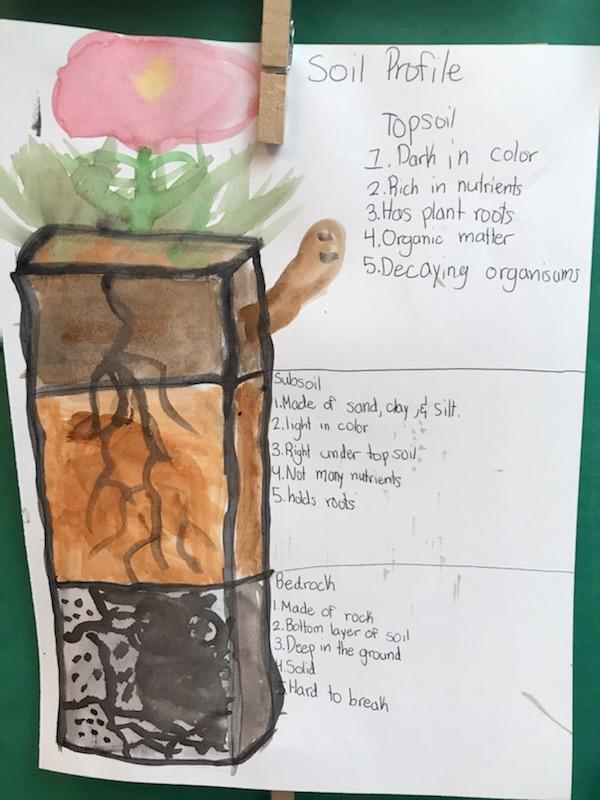
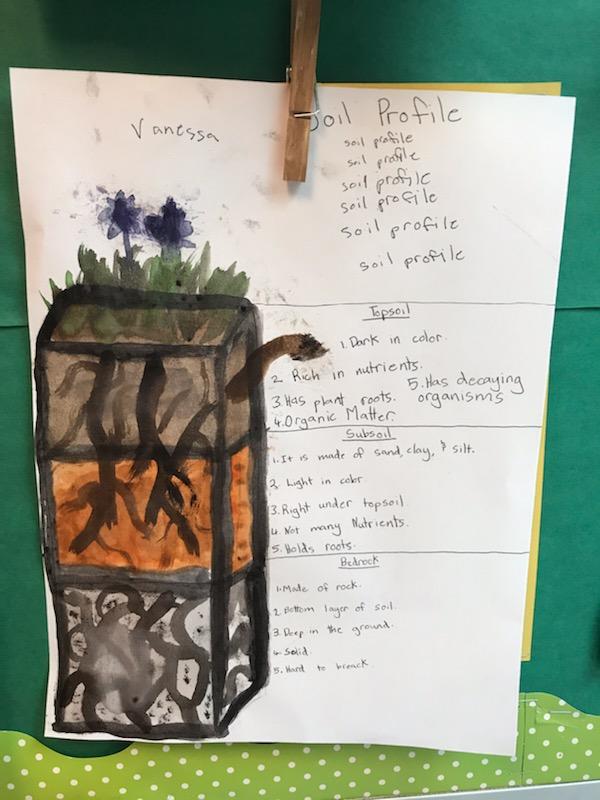
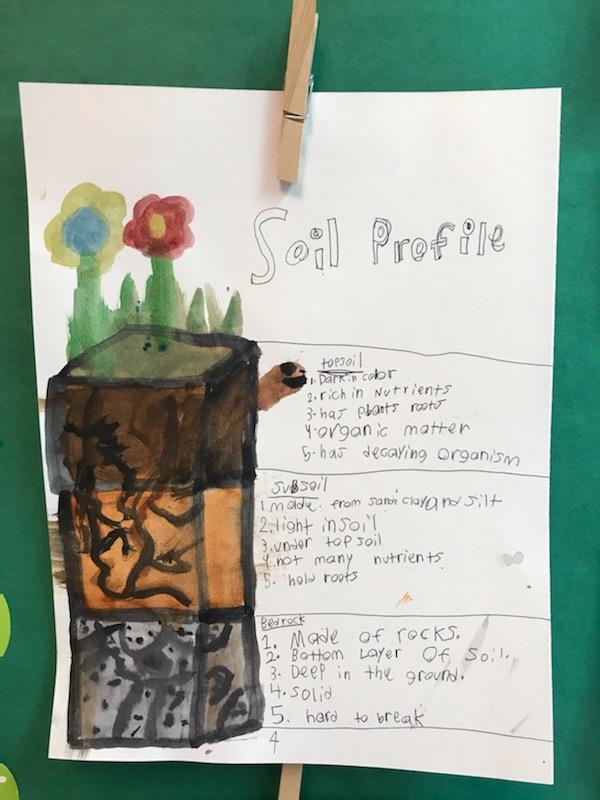
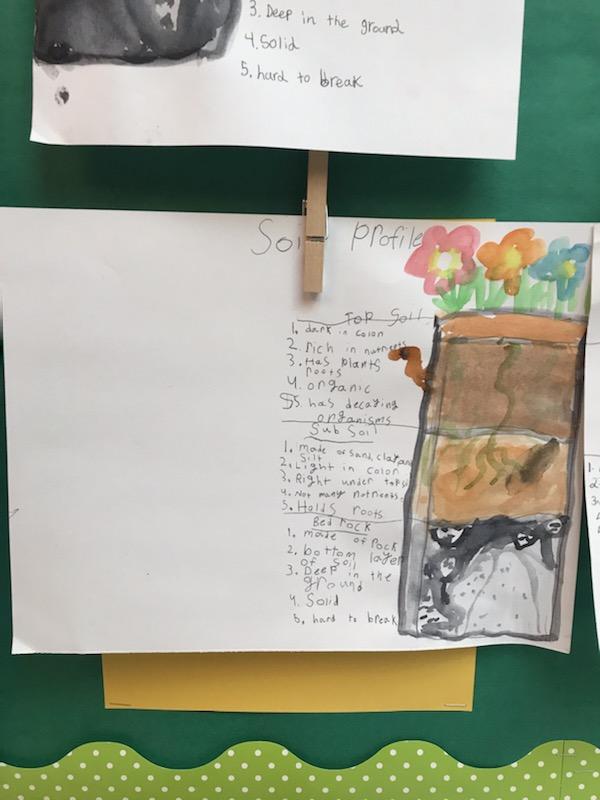
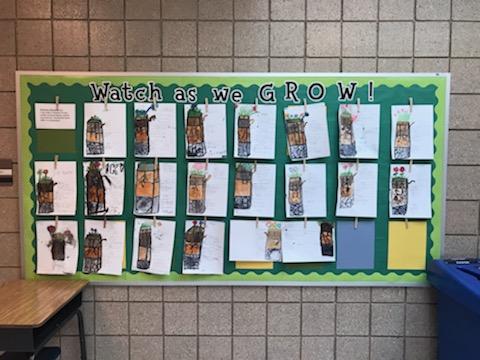
Today’s post I want to feature a teacher who was an excellent representation of integrating arts into her core curriculum. Andrea Heiner teaches fourth grade in Utah, and during her science curriculum of soil layers, she used watercolors as their medium for creating a diagram. A little science, a little art, a lot of fun! Check out their great project here: 

The students started with the bottom layer, bedrock. The next day once this layer was dry, they worked on the second layer, subsoil.

Each layer shows components of what this layer of soil contains, such as rocks, roots, and even worms!

Once their paintings were finished, they added labels and descriptions for each section.

What a great example of arts integration! Great job, Ms. Heiner!

What’s The Deal With Puppets In The Classroom?

Puppets have a special place in the classroom of littles. Using a puppet in teaching may feel like another item to worry about or check off your ever-growing to-do list, however, when used correctly, they can be powerful to students. It’s as if you have a second teacher in the classroom, a separate being with separate ideas is what they see it as. Puppets to students are magical, even when they are old enough to know better of what they are and how they work, their little brains work in the way that they look at that inanimate object as an animate object with its own thoughts and feelings, even if they are all indirectly coming from you as the puppeteer. 

Tips for using a puppet in the classroom: 

  • Use him as an example of good behaviors you want students to model.
  • Use him as an example of common problems in the classroom such as trouble with a math problem. Later, when students run into the same problem, a great reminder for them would be how the puppet solved the problem. 
  • Use him as a new storyteller in the classroom. 
  • Let the puppet introduce new topics such as persuasive writing or reading non-fiction. 
  • Let the students use the puppet as a writing audience. 
  • Turn it into an art project and allow the students to create their own puppets. 

Puppets have a big place in the classroom, whether he or she becomes a part of the classroom, or they are simply used in dramatic play for storytelling. The best part of puppets is that they can be as complicated and expensive as your limits allow, but also as simple as a sock with buttons glued on. They don’t care about the complexity of it, they just care about the magic behind it.

Do you use puppets in the classroom? What benefits do you see? 

Reader’s Theaters: The Golden Nugget Of Arts In Core Curriculum

Reader’s theaters. A tale as old as time. Teachers have been using reader’s theaters in the classroom for years and years now because they are the golden nugget of adding in arts to our reading and language arts curriculum. 

Students can work on reading, reading out loud, reading with emotion, drama/acting, and more while practicing and performing a reader’s theater. 

Ways to make an RT successful: 

  • Give it an authentic purpose and audience.  
  • Model, model, model the proper way to read for an RT. 
  • Pick an interesting topic to the students. 
  • Choose a good RT based on the reading level of your students. 
  • Utilize gyms, theaters, and stages in the school to practice reading.
  • Film the students practicing for them to go back and watch so that they can see what they look like reading out loud.  

A few websites full of good (and mostly free) reader’s theaters: 

http://www.teachingheart.net/readerstheater.htm

https://www.readinga-z.com/fluency/readers-theater-scripts/

http://www.thebestclass.org/rtscripts.html

Beyond these, a simple Google, Pinterest, or Teachers Pay Teachers search can also lead you to great reader’s theaters, whether free or paid. 

In my own experience, I saw reluctant readers shine through as they performed an RT on space for a younger grade learning about planets. Their confidence came through as they watched themselves get better and better in the spotlight with practice. Reading wasn’t a chore, it became fun and exciting to them. 

What are some great experiences you’ve seen while doing reader’s theaters in your classroom? 

A Little Math, A Little Art, A Lot Of Fun

When math overrides the majority of the time throughout the day, how do we incorporate the arts? We make art mathematical! Here is a fun activity to learn about the color wheel, as well as apply fraction skills in the process of creating the color wheel. 

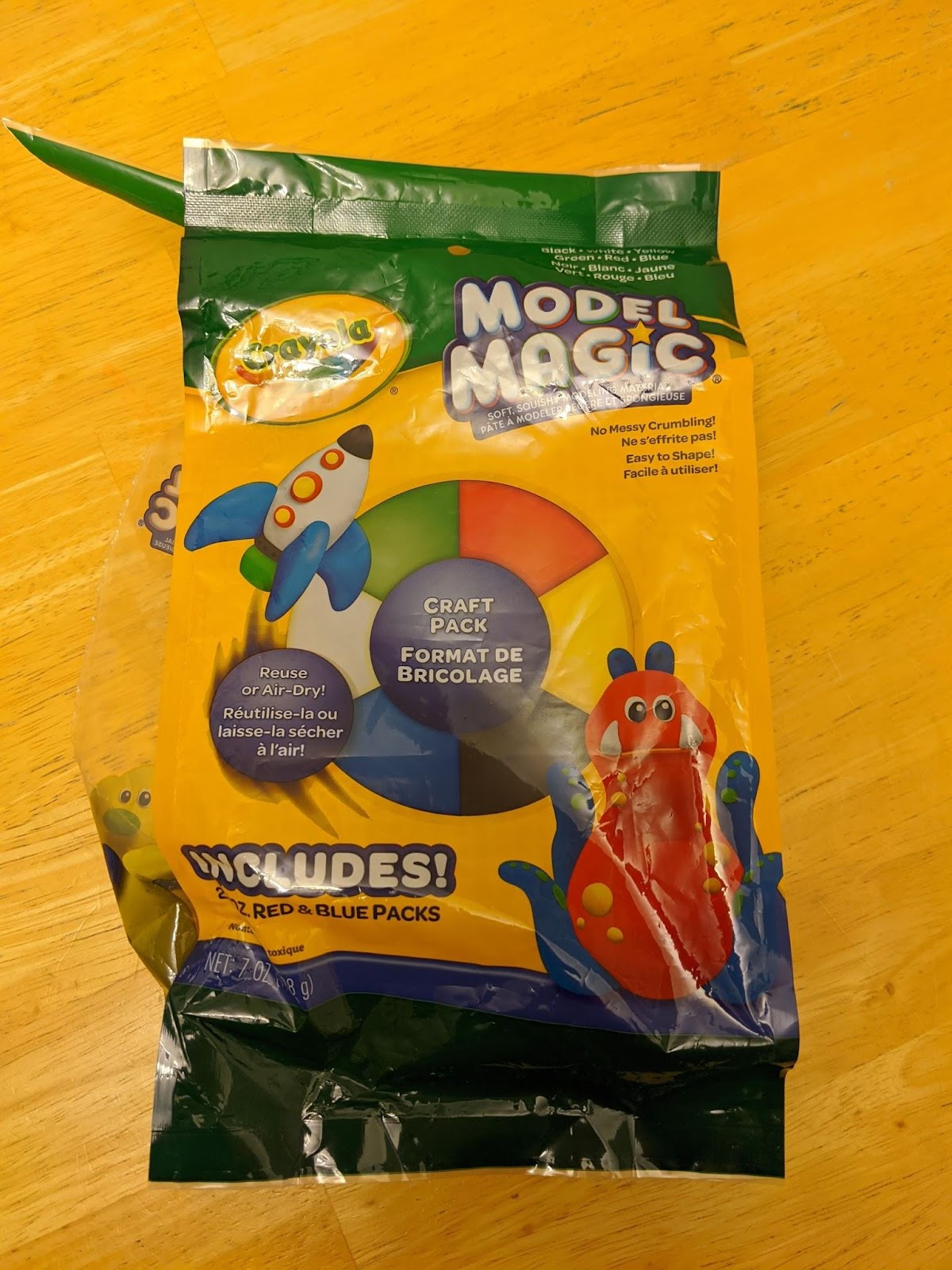
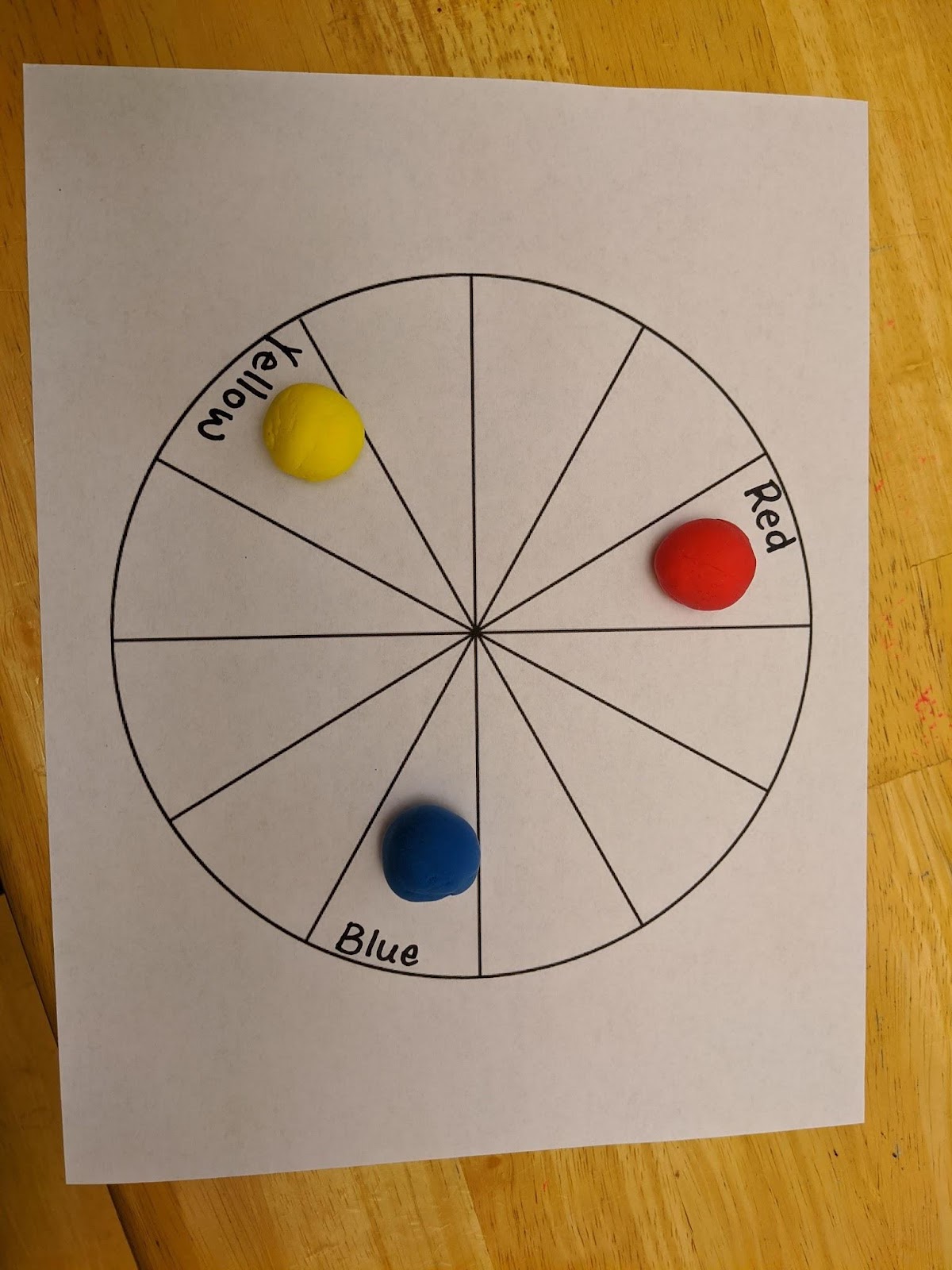
You’ll need a print out of a blank or semi-filled in color wheel, and modeling clay.

I used Crayola Model Magic clay for this activity. It’s soft, squishy, and will change colors when mixed! Normal clay can work just fine too. You can either let it dry and let them glue it to the page when it’s finished, or toss it back all together and store it in an airtight container for future use. 

Start with three equal pieces of clay in red, yellow, and blue. 

Leave a small reference piece behind, then with remaining clay, split into two equal pieces, creating two halves.  

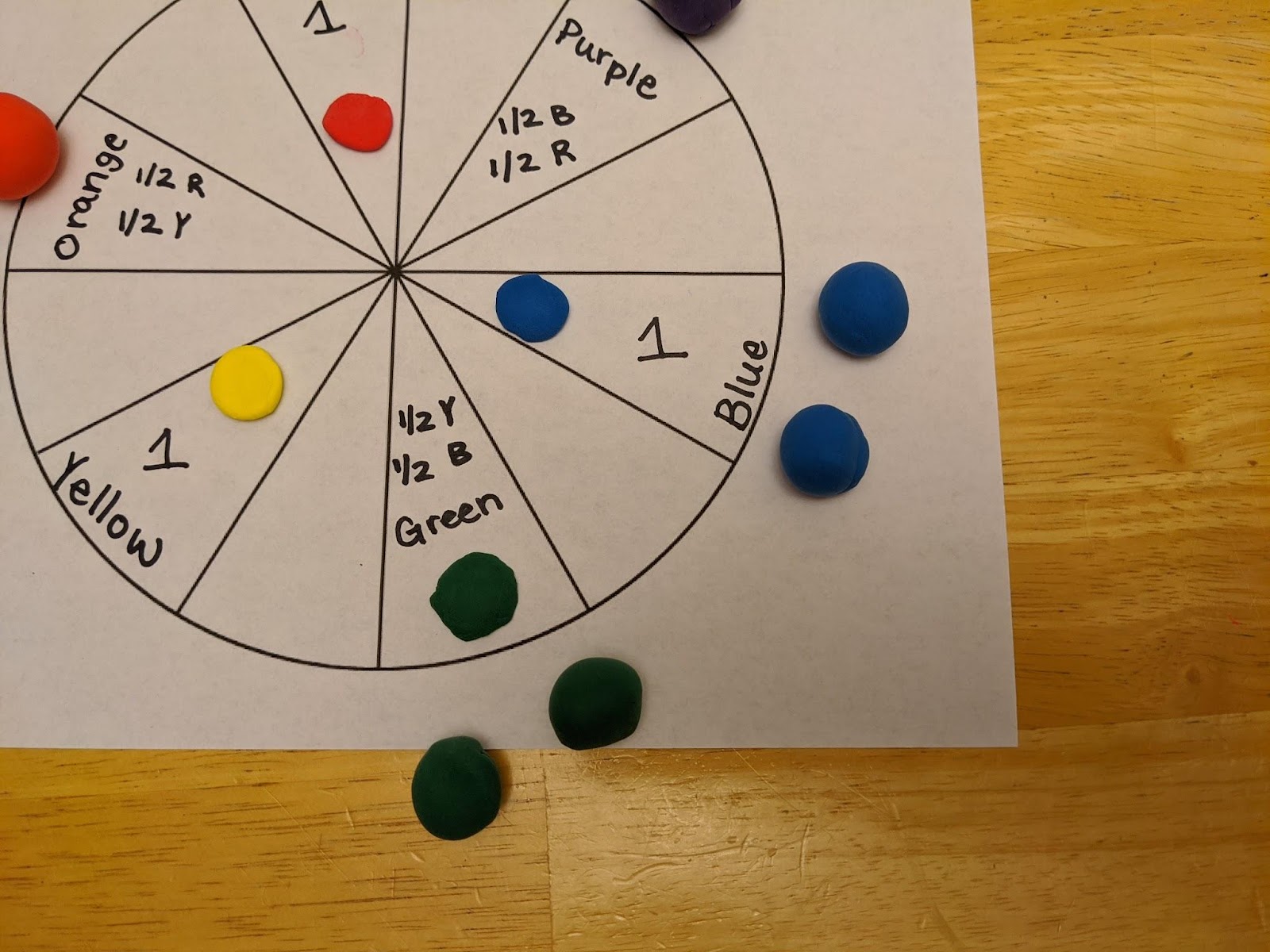
Mix the colors! Write out the fractions on the paper as well. 

Orange= ½ R ½ Y 

Purple= ½ B ½ R 

Green ½ Y ½ B 

For a shorter activity, find a smaller color wheel cut into sixths and stop here. For a longer activity, continue on. For the sake of a shorter blog post, I will only model one part of the next step.

On the blue and green side- split the blue and green pieces in ½. (For reference, I pulled a new piece of blue clay for this.)

Mix the blue and green pieces to make green-blue. Green-blue is equal to ½ G, ½ B. Or it is also equal to ¼ Y ¾ B. 

The other half of the green that was split before will be used to mix with a half piece of the yellow. 

Continue the same with yellow-green, red-orange, etc. 

Common core standards: 
CCSS.MATH.CONTENT.3.NF.A.3
CCSS.MATH.CONTENT.4.NF.A.2

featured image: hosmerart.blogspot.com

Integrating Arts And The Benefits It Provides

If you read my post about crafting with my first graders, you know that I am not a crafty teacher, and I accept that. However, just because I’m not into crafting or making cute folded paper animals doesn’t mean I don’t see the benefit of using art in the classroom. 

Art is a fantastic way for students to take a break from the regime of always having the “right” answers to everything. There is no right or wrong in creating something artistic, there are just different levels of creativity. It’s a way to allow students to express themselves and have the opportunity to grow something how they want to. They are given the chance to make something that has never existed before.

We have preschools, daycares and even some schools across the nation that hone in on art skills, whether that be painting, drama, or the study of fine art. Why does this need to be more limited once students hit kindergarten or first grade? With common core standards for each core curriculum, it can be so hard to fit art time into your everyday schedule, but by integrating arts into core studies, it is possible, and it can be simple too. 

Have art supplies readily available for students. 

Allow students to be creative and hands-on with the material they are learning. 

Teach clean up procedures and expectations with art supplies to minimize messes. 

Encourage creativity.

Using arts in education gives students the opportunity to share thoughts, feelings, and understandings without having to speak or write. It not only teaches them another form of communication but gives them an alternative for when speaking and writing may be too much for them. The benefits of art go beyond what I can even explain. However, this video does a great job of it. 

The integration of arts into core subjects will show longer and better comprehension of the subject, as well as deeper interest. Vocabulary grows and creativity develops. Who wouldn’t want that for a child? 

How are you using arts integration in your classrooms?