A Method to the Madness

Imagine for a minute that you are in a chemistry class. You’re learning about endothermic and exothermic reactions, and your assignment is to conduct an experiment with the end result being one of those two reactions. Rather than showing you how to do it, your teacher stands at the front of the room and delivers a lecture to the class about which elements will react when combined. Not really that exciting and engaging, right? 

There are so many things to learn about, and so many ways to teach them. Sure, a chemistry teacher could lecture about reactions, but actually showing the class how to perform the experiments would be much more effective. Similarly, a history teacher could go through a slide show of information about the Civil War, but there might be other ways to teach that same material that would create a longer lasting impact on the students. 

Students learn in so many different ways, so it makes sense that teachers need to teach material using many different methods. The methods used will vary from subject to subject, and even will vary within each subject depending on what exactly is being taught, as some topics lend themselves to one particular method over another. 

With so many methods to choose from, how is a teacher supposed to pick which one(s) to use?! In order to choose the best one, it might be helpful to know what exactly each method is, and what kinds of content it might be best suited for. 

Lecture Based

In this method, the teacher provides a large amount of information by delivering a lecture to the class. While not always engaging, it can be an effective way to get a lot of information out. This method is often used to introduce a new topic or provide background knowledge before taking a deeper dive into a topic. The use of visual aids, stories, jokes, and questions can help keep students engaged. 

Inquiry Based

Inquiry based teaching is the practice of allowing students to come up with questions, then explore various resources to find the answers to those questions. Students can conduct research, collect data, and gather evidence to support their inquiries. This type of teaching is typically most effective in science classes as well as history classes.

Technology Based

Technology based teaching is just as it sounds– teaching using technology, and allowing students to use technology to learn and explore topics. This can be incorporated into nearly any subject, and can be very beneficial to students. Devices such as computers, tablets, online programs, or even smart phones can provide students with a wide base of resources with which to learn.

Group Based

In group based teaching, the teacher provides the background knowledge, then has students work together in groups to learn more, conduct research, conduct experiments, gather data, and so on. This approach promotes cooperation and communication among students. Teachers become facilitators in this method. They are there to help students as needed, but a large portion of what is learned is done as students work together. 

Game Based

Gamification has recently become quite a popular way to teach. It’s engaging, fun, and can be used for nearly any subject. Students usually associate games with fun, so when teachers turn learning into a game type format, the brain automatically sees the activity as more enticing. There are so many online options for game based teaching. In addition to creating their own educational games, teachers can pick from several online gamification platforms to create fun, educational games for their students. Websites like Kahoot!, Quizizz, Blooket, Gimkit, and Quizlet Live are all excellent resources available to teachers. 

Individual Based

In this method, the teacher provides the content, but students become the main facilitator in their own learning. They become responsible for how and where they learn, which creates a sense of ownership. This can lead to greater confidence and deeper learning. 

Hands-On Learning

This method gives students a chance to really get into the content and experience it with their senses. Hands-on learning experiences have been shown to make a more lasting impact on student brains than lectures alone. When a student can experiment, ask questions, and form a physical product based on what has been learned, the information is much more likely to be retained. 

There are many methods teachers can use to deliver information to their students, and there truly isn’t a right or wrong way to teach material. There are certainly some methods that are more effective for some subjects than they are for others, but any teacher can use any of these teaching methods and still get results. Good teachers also don’t just stick to one type of teaching; they change their method based on what is best for the information they are going to teach, and what is best for their students. Don’t be afraid to try new teaching methods– you might be pleasantly surprised that you really enjoy one you haven’t tried. However you decide to teach though, make sure you do it with your students’ best interests in mind, and you will see your students succeed!

Color Me Concluded: My Final Musings on the True Colors Personality Test

This post is part of a series of posts on teaching to different personality types as found in the True Colors Personality Test. To see more, head here.

If you’ve gotten to the end of my True Colors Personality exploration, you might be asking yourself “Now what? How can I apply this knowledge to better myself as a teacher/parent/student/friend?” Ultimately, that is up to you. I know a lot of people think personality tests can be gimmicky, and when it comes to the “What Kind of Cheese Are You on the Weekends?” sort of test, I can agree. But I do think there are some personality tests that can propel you toward valuable introspection. McKenzie did a great job of covering a few of these with her deep dives of the Myers-Briggs, Enneagram , and the Child Whisperer personality tests.

As noted on Better Help, “The true colors personality test provides a method of understanding ourselves and others. The test uses the colors orange, gold, blue and green to represent four different personality types. The four colors combine in different ways to make up different personality spectrums. For most people, one of the four types is more dominant than the others. Learning about our personalities offers insights into our different behaviors, motivations and more.

“By using colors instead of labels, the true colors personality test aims to improve global understanding. The intuitive classification makes it easier for us to identify and remember the four personality types.”

These tests aren’t meant to serve as definitive labels for yourself and others; they are merely guideposts that can help you make sense of human nature. It can be easy to see your results in black and white when they should be used to recognize all the shades of gray within your personality and the personality of those around you. I could tell myself, “As someone with a blue personality, I shouldn’t be friends with gold personalities because we are too different.” And sure, there are some personalities that might clash a little more with others, but the whole point of these tests is to prove that anyone can get along with everyone if you take the time to understand them.

Another benefit of knowing different personality tests is that you can use your results to identify opportunities for growth. As a blue, maybe you need a lesson on resolving conflict instead of avoiding it. If you are a gold, you might consider trying to live in the moment rather than planning for the future. For those with a green personality, practice identifying your emotions and giving yourself permission to feel them. Perhaps an orange needs to train themselves to think before acting. 

Think of personality test a healthy reminder that we all have strengths, weaknesses, quirks (endearing or otherwise), and something unique to bring to the table. Personality tests can be a wonderful reference point in learning how to get along with others, regardless of what their results indicate. Don’t let someone’s True Color dictate to you how you think that person will act, allow them to show you. 

As a teacher, you should distribute at least one personality test within the first week of school. If your students are too young to answer questions themselves, send the test to their parents and have them answer it. Not only is it a fun activity for your class, but it allows you to better plan lessons and activities. It opens up lines of communication and sparks meaningful conversations.

Do you know your True Color? How has this knowledge helped you as a teacher?

Planting The Popcorn Seed Of Learning

In college, I took a course called “Teaching Science” where we spent class time creating our own scientific journals and carrying out experiments that our teacher created and that we created ourselves. While these were happening, discussions happened of how we can apply this to teaching our students about science, and how we can incorporate science into different aspects of our curriculum such as writing or math in order to see more of it in our school year. 

My professor for the course was truly one of my favorite professors throughout my entire college career. He reiterated over and over as often as possible that the goal with science was to be so influential that students picked it up and continued to use the scientific method on their own, beyond school. He told us that if we were teaching science correctly, students would be excited by the subject and want to know more, their learning would go well beyond the walls of the school. 

While I respected him greatly as a teacher, I never believed that I could be the type of science teacher to instill this in my own students. My emphasis for my degree was in language arts, and I had a hard time choosing between that and reading. Math and science were so far off of my radar. I knew it was something I would have to teach, but science wasn’t a subject I saw myself being so excited about that it shone through to my students. 

One day in class we were studying our long term science experiment, a flower we had planted. A colleague of mine brought up a childhood story of her sister and herself planting popcorn kernels made for air popping in their sandbox, and how they would grow tall enough that their mom would rip them out of the sand. My professor looked at us with a confused look and told us this was impossible. He said that the popcorn kernels we buy from the grocery store is processed and wouldn’t grow in soil, let alone sand. He claimed she must have been given corn seeds or some other type of seed because having any result from popcorn kernels was not possible.

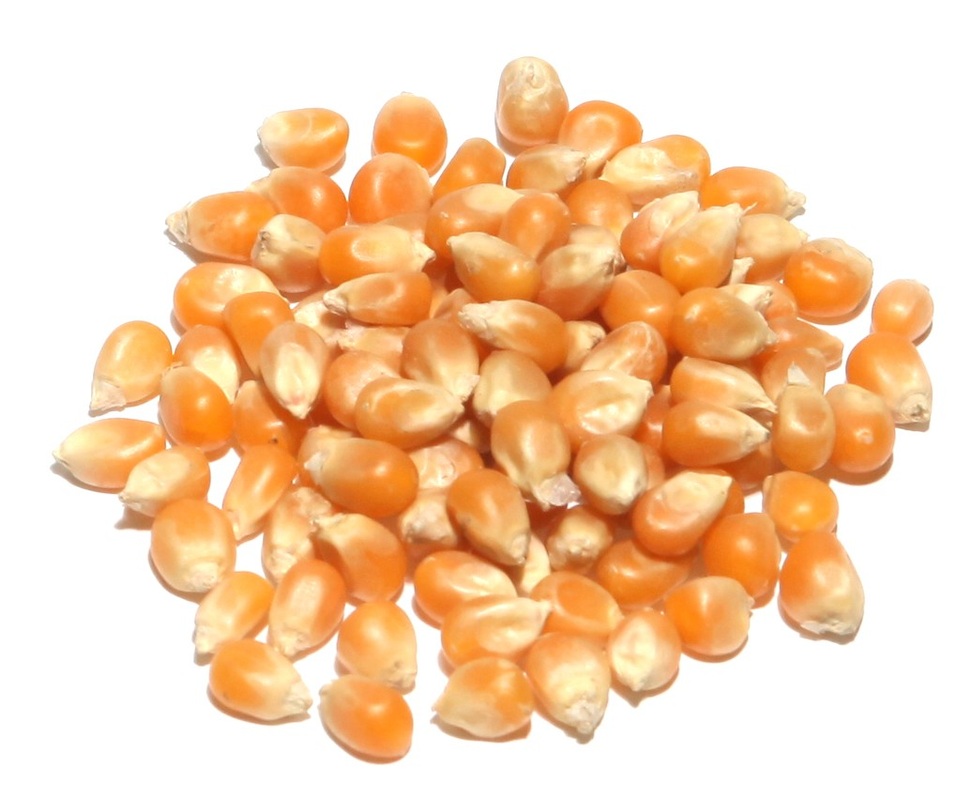
The popcorn kernels I planted

Maybe it was the stubbornness in me, maybe it was my growing love for science, but whatever it was, there was a burning fire in me to prove him wrong. That night I went home and found a bag of popcorn kernels in my pantry, planted them in a pot of soil, and left them in the kitchen window. I didn’t tell him about it at first, because obviously I wasn’t about to be embarrassed if he was right and the popcorn seeds didn’t yield anything. Days and weeks went by with no sign of improvement, but I continued to water them and wait for the day they grew into something. 

One day I woke up to one little green leaf sticking out of the soil, it was incredible! It was actually working! I continued to take care of my plants until they grew bigger and stronger, strong enough to take a trip up to campus with me during my class. 

I walked into class that day holding my pot of popcorn seeds that had turned into real plants with the biggest smile on my face. I plopped it down on my professor’s desk and after he looked down at the plant, he looked up at me waiting for an explanation of what this was and why it was on his desk. 

“You told us popcorn kernels wouldn’t grow anything, you claimed that they were processed enough that they wouldn’t turn into anything when planted. Well, here you are, this is what happens when you plant popcorn kernels.” 

Immediately his eyes lit up and I distinctly remember him jumping up out of his chair in excitement. I was waiting for his praise on what a great plant caretaker I was and how right I was. I was also waiting to hear those precious words come out of his mouth, I was wrong. But that’s not what happened next. 

“You get it! You did it! You see what I’m saying now, this is genuine science, this is the ultimate goal as a teacher! You wanted answers about popcorn kernels and instead of going to the internet or accepting my answer, you conducted an experiment using the scientific method yourself! You did it!” 

At the time I was somewhat dissatisfied with his reaction, I wanted him to admit how wrong he was. But later on, when I looked back, I realized the full impact of what had happened. He knew from the beginning that popcorn kernels would grow, he just wanted to test us. He wanted someone to prove him wrong all along, and that ended up being me. 

That semester I may have planted popcorn kernels, but a seed was also planted inside of me. A seed that helped me understand why we teach science and how we teach it. I grew up thinking science was memorizing vocabulary and mixing vinegar with baking soda once in a while, but now I know that teaching science has evolved into inquiry and wonder of the world around us, how it works, and why it works the way it does and putting it to the test when we want to understand something deeper.

It took until my senior year of my undergrad education before I could grasp this concept, so my only hope is that I can inspire students to learn it much younger than I did and to plant the seed in them as well. 

What If Inquiry-Based Teaching Isn’t Always The Right Answer?

Inquiry-based learning has become more of a common practice throughout schools. It encourages asking questions, thinking deeper, and applying the material to personal lives. Inquiry-based learning is flexible because the student is the leader for where the conversation and learning leads. It can have higher engagement because the student can take the material where they want it to go. 

This type of learning is so beneficial in some studies. However, are there times when inquiry-based isn’t best? What are the parameters for inquiry-based versus direct instruction? 

Teamwork and group projects are where inquiry-based flourishes, students can collaborate, ask questions, and use the skills developed in inquiry learning to look deeper into the subject. 

Science lessons based on experiment and discovering new ideas is also a great platform for inquiry. 

Discussions on subjects are where inquiry-based can blossom. Promoting questions with long or different answers can assist in deeper inquiry, instead of direct, one-word answer questions. 

However, are there times inquiry-based learning isn’t the best way? Where does direct instruction fit into the school day? Here is a great rule of thumb- throw out inquiry-based as soon as you see a student struggling. It’s important to note that struggle is good when using inquiry because it can lead to more learning breakthroughs for the student. The struggle that causes red flags is the kids who are constantly struggling, the kids on a lower reading level than their peers, or the ones who cannot seem to grasp the concept enough to participate in these discussions. This is where direct instruction needs to happen. 

Imagine a struggling child who is constantly poked and prodded with questions about letters and sounds in order for them to inquire more about it, eventually leading to them knowing what the letter names and sounds are. If they are already behind, more inquiring isn’t going to help them. It’s a powerful tool to directly tell them what something is and how it functions over and over until it clicks. Once they can grasp this complex concept, they can continue to move up and work on each concept until eventually, they can participate in inquiry discussions. 

Sometimes, kids don’t need more questions, they just need direct information. 

Don’t get me wrong, I am a huge advocate for inquiry-based learning, and plan to write more on the subject matter. But I am also an advocate for doing what is best for the student. 

What is your rule of thumb for direct versus inquiry learning?