Storms Have You Stuck Inside?

Within the last week, severe winter storms have hit several cities across the United States, causing many schools to close due to cold temperatures, ice, and/or snow. If schools are closed, that means kids are home– and that can sometimes leave parents or caretakers scrambling to come up with activities for their kids to do. 

If you have found yourself in this situation before, you know that it can be a bit stressful. Below are a few fun, engaging activities you can do for free (or almost free), and with very minimal prep time. These activities can be adapted for any age and ability.

  • Save the Animals! (or Legos, marbles, tiny action figures, etc.)
    Place small animals (or any object of your choice) in a muffin tin. Fill each compartment with water. Let it freeze. Once it is frozen, you can put the giant ice cube in a bowl or shallow tray, then give your child a medicine dropper or syringe and a cup of warm-ish water. Using the dropper, they can squirt water at the ice until it is melted enough to save the object inside.
  • Don’t Touch the Carpet!
    This game is similar to Floor is Lava, but won’t require your kids to jump all over your furniture. Assign a starting point and an end destination. Give each participant two small pillows, towels, pieces of paper, paper plates, etc. Using only those two objects as their safe places to step, they must make their way from the beginning point to the end point. Usually this would be done by stepping on one while placing the other in front of you, reaching back to grab the first one, then placing that one in front of you, and so on. However, kids can get creative and can problem solve to see if they can think of any other ways to accomplish their mission. This gets their brains thinking and their bodies moving!
  • Lego Task Cards
    On small pieces of paper, write the name of several objects (one per paper). Have your child choose one paper out of a bowl, then create that object. This promotes problem solving, critical thinking, and fine motor skill development. You can also turn it into a friendly competition if you have more than one child playing. 
  • Creative Crafting
    Set out construction paper, popsicle sticks, googly eyes, kid-safe scissors, pipe cleaners, glue, markers, and any other kid-friendly craft supplies you might have. Watch the magic unfold as they cut, glue, and create to their heart’s content. You’ll be amazed at what they come up with as their imaginations run wild.
  • Machine Factory
    Using extra boxes, empty paper towel or toilet paper tubes, string, scissors, and paper, glue or tape together a working machine. As the adult, you can choose what function their machine must carry out, or you can let them get creative and come up with their own idea. This is an excellent STEM activity, as it allows kids to think about logistics, function, machine parts, and how to carry out their plan. 
  • Puzzle Time
    Jigsaw puzzles are such a fun thing to do when you’re cozied up in your house (or anytime, really!). Not only are they fun for all ages, they also keep the mind active. Puzzles promote family togetherness and problem solving together. 

Those winter storms sure can be brutal, and can push your sanity to the edge, but there are so many fun things you can do with your kids when you have nowhere to go and no place to be. Being stuck inside doesn’t have to be boring– it can be fun for everyone AND can even be educational. If you’re one who has been impacted by the recent storms, I’m sending all my best wishes your way! You’ve got this!

Imaginative Play- A Product Of Boredom

Lately, my daughter has adopted a new favorite phrase: “Mom, I’m hungry.” Translated, she’s really saying, “Mom, I’m bored.” I think this is common among most kids. 

I used to jump on the opportunity to give her productive play or activities when she was bored, but one day I was busy. I didn’t have the capabilities to bend and meet her every need. I felt like a bad mom, not giving her the attention she needed, or more so, wanted. What followed made up for my guilt. 

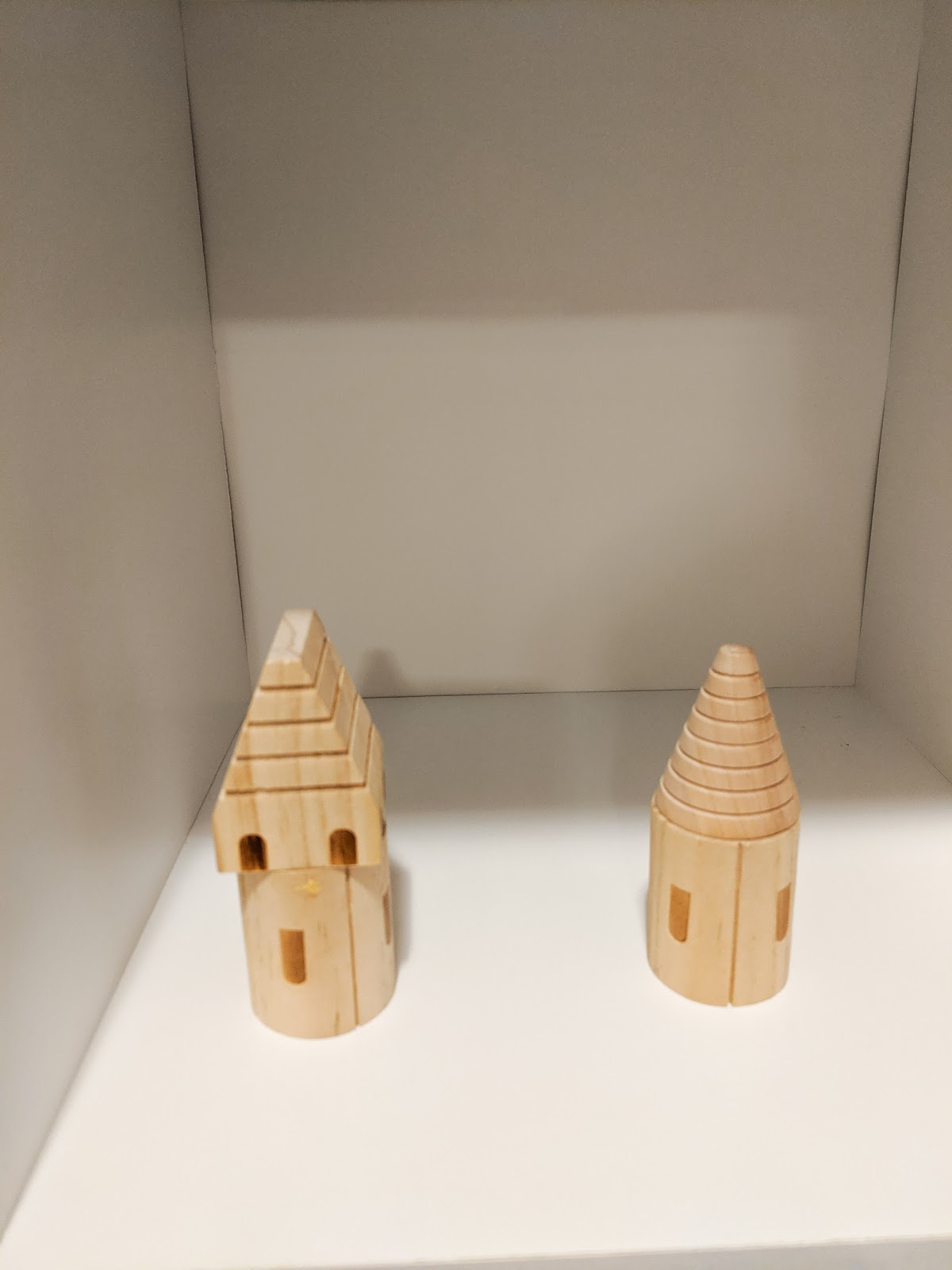
A tiny glimpse into the block city- A product of boredom

I allowed boredom for a small time and her imagination ran wild. With a little prompting, soon our wooden blocks were spread throughout the house with castles and buildings everywhere. Then, the baby dolls were invited to crash down the whole city, only to turn around and rebuild it. All while I made dinner. 

I’m sure I could have stuck another sensory bin in front of her, or given her some crayons and paper. We are always stocked up with sticker books and paints, which would have sufficed and held her over until the food was ready. All of these truly are great, educational, enriching options for toddlers and kids, but there’s something to say about letting kids reach boredom. It’s incredible what can follow. 

Instead, I let her run free and allowed time for her little mind to create her own play, her own work. Instead of being limited to paper and paints or the stickers I have available, she used my house as her canvas to create her own world to escape in for a time with the plentiful toys we have lying around.

Had I facilitated another activity for her, her imagination would not have grown that day. It was a great reminder that we need to let kids be bored. 

What products have you witnessed as a result of boredom? How can we find time to allow kids to be bored in schools, as well at home?

Featured Image: Pexels.com

How To Effectively Use Roxaboxen In The Classroom

The first time I heard the story Roxaboxen, I was well into my college years. This saddens me, considering the book was written in 1991, a few years before I was even born! It shows what a timeless classic it has become since it’s still used in schools and read to children today. 

I fell in love with this book right away because it drew me back to my childhood when my neighborhood friends and I would spend hours a day in our driveways drawing sidewalk chalk “houses” furnished with lavish furniture and multiple rooms. We would ride our bikes from driveway to driveway to visit each other’s homes. When the rain would wash the houses away we grabbed our sidewalk chalk again and started over. This cycle lasted for years and years. 

Roxaboxen is a story about friends in Arizona who use rocks and boxes to build homes, buildings, and businesses. They have cops so cars don’t go over the speed limit, and a jail for those that do. These children create more and more every year, even making a cemetery for a lizard with an unfortunate ending. 

How can this book be used in the classroom? It teaches about community and working together. This book is an excellent vehicle for a discussion of the topics, whatever the age group. It can give a brief introduction into the life cycle, watching the creation and expansion of the town, then later on how it was deserted once the children grew up. Also, not to mention- the lizard. 

Think of the beautiful creations children can create of their own communities, possibly even with pebbles and sugar cubes, their own rocks and boxes. The amount of possibilities this creates are endless. 

A few years back I took an Art in Education seminar. A dance teacher used Roxaboxen as our main focus of the lesson. We were split into different teams, each given a few cardboard boxes and balls for our rocks and boxes. We collaborated as a team to define our community values then created a dance with our boxes and balls to reflect these values we had chosen. It was beautiful. 

Roxaboxen can lead to many powerful conversations and lessons down the road, but ultimately, I believe it is the perfect book to spark the imagination as a child. I can see my friends and me now, hearing that story in our early elementary days and running with it. We would have run out to recess with ideas swirling in our minds of the communities we were about to create. It’s unfortunate that I never had the exposure to this picture book to place those imaginative ideas in my mind. 

Please, do your students a favor, regardless of their age, and tell them the great story of Roxaboxen

Have you read your students Roxaboxen? What discussions or activities did you use? Most importantly- How has Roxaboxen influenced you as a person and a teacher?